Heritage featured strongly in the 2016 Wellington Architecture awards this year, with four great projects by four of the big architecture firms in Wellington.
Hope Gibbons Building, by Tennent+Brown Architects
 Hope Gibbons Building. Image: Thomas Seear-Budd
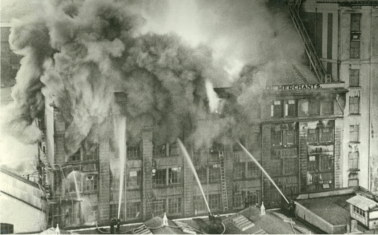
Hope Gibbons is the name I associate with a fire – whenever you’re looking for files at Archives New Zealand and you see the name, your heart sinks, as many thousands of government files were lost in a fire in the arhcives stored in the building in 1952. It is certainly looking much better now.
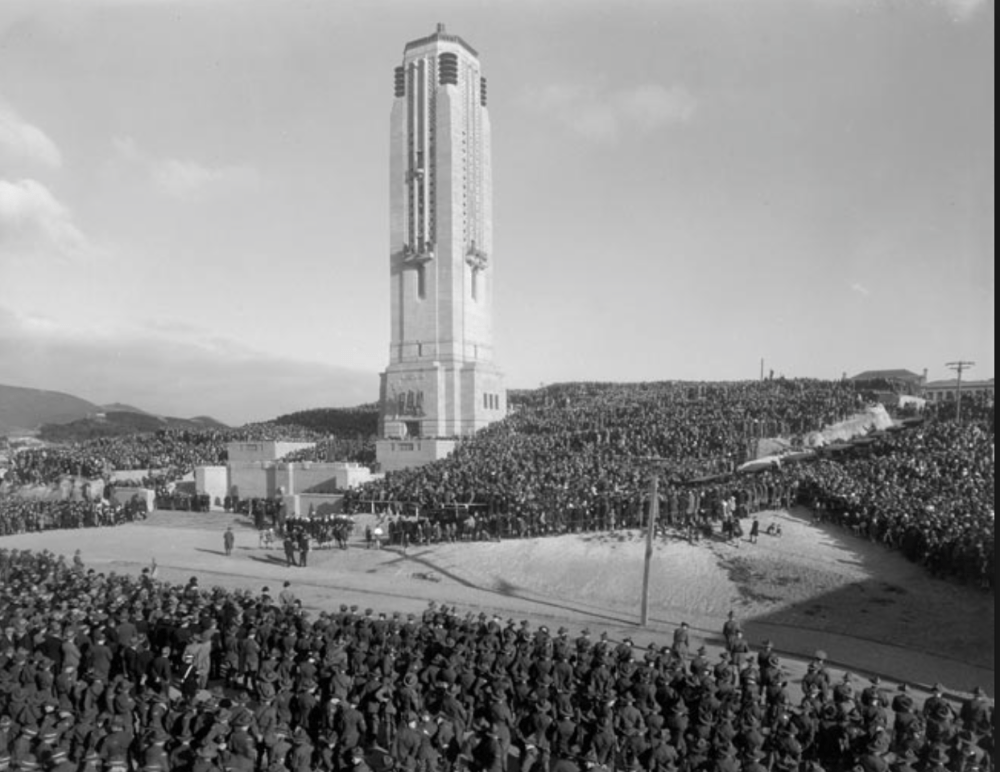
National War Memorial Projects, by Studio of Pacific Architecture
 National War Memorial Projects. Image: Jason Mann
The Carillion was stengthened and replastered, and the Hall of Memories strengthened. The judges called the work an “impeccable” restoration, with almost imperceptible changes to these important national war memorials.
Wraight Athfield Landscape + Architecture, also received an award for public architecture for their work on the surrounding park, with the judges noting the importance of the setting in relation to the Carillon: “These magnificent grounds finally provide the National War Museum with a setting appropriate to its significance.”.
Public Trust Building, by Warren and Mahoney Architects
 Public Trust Building. Image: Paul McCredie

The Public Trust building is one of the most elaborate buildings in New Zealand, and has seen off a number of threats, including earthquakes and a planed demolition in 1975, but was recently saved and restored by property developer Maurice Clark, who described it as his most difficult project, and now houses the Ministry of Culture and Heritage.
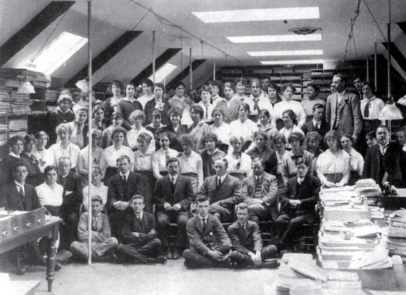
The men and women of the Statistics Dept working in the attic of the Public Trust Building during World War One.
Wellington Museum – The Attic, by Athfield Architects
 The Attic. Image: Mark Tantrum
One of my favourite new spaces in town, the new attic space at the Museum of Wellington is such a clever use of a previously neglected space, which still needs to accomodate the services for the building. When I visited, I had no idea that the return air is hidden in a central circular element which doubles as a ‘spacecraft’. I liked the way the attic remained connected to the rest of the building, but still seemed its own enclosed space.
 Bay Heritage Consultants Wellington